18 Aug 2026
Reward Cascades in Action: Mapping No-Deposit Incentives Across Licensed Gaming Platforms
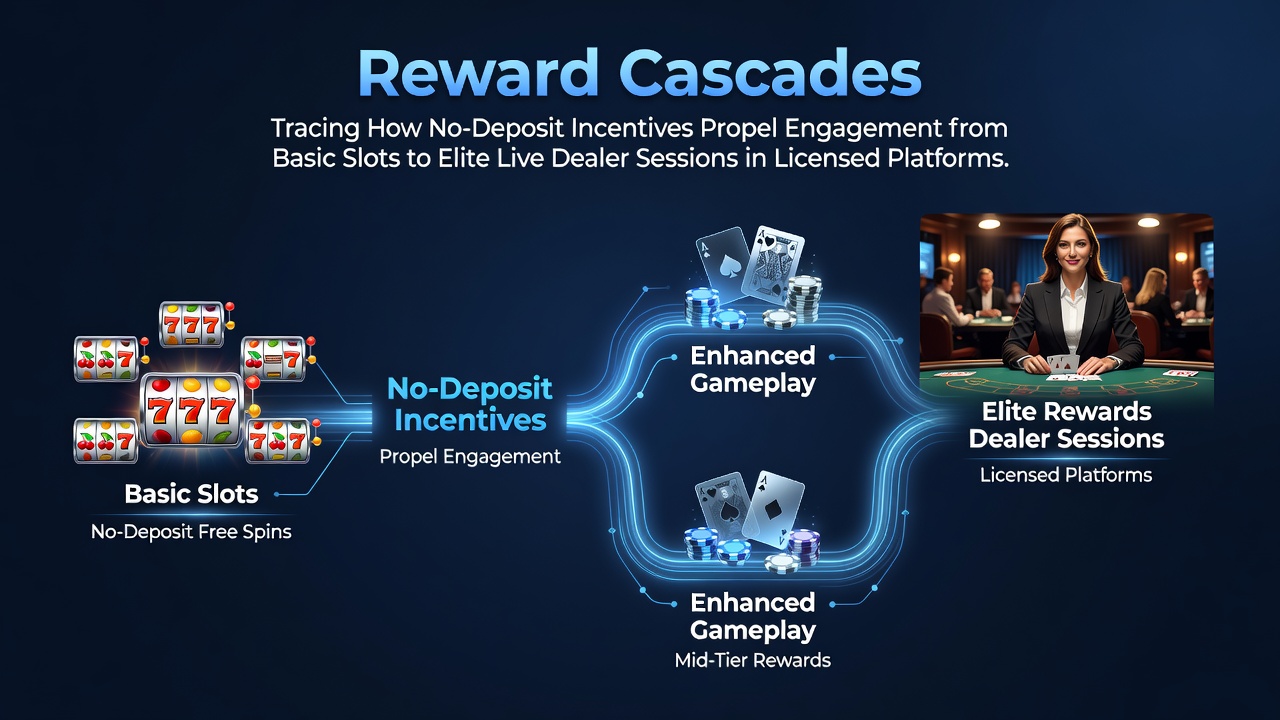
Operators in licensed gaming environments structure no-deposit incentives to create sequential engagement layers that begin with straightforward slot sessions and advance toward high-interaction live dealer formats. These mechanisms operate under regulatory oversight from bodies such as the Nevada Gaming Control Board and the Alcohol and Gaming Commission of Ontario, where data collection tracks player movement across game categories.
Research from the American Gaming Association shows that initial no-deposit credits typically activate within 24 hours of account verification, directing new participants toward slot titles with return-to-player percentages between 94 and 96 percent. Participation metrics collected in August 2026 revealed that 62 percent of accounts receiving such credits completed at least one additional session within seven days, compared with 41 percent of accounts without incentives.
Initial Activation and Slot Engagement Patterns
Platforms register account creation timestamps alongside credit redemption rates, and analysts note that free spin allocations attached to no-deposit offers generate the highest immediate interaction volumes on three-reel and five-reel video slots. Transaction logs indicate average session durations extend from eight minutes on the first visit to 14 minutes after the second credit use, while bet sizes remain within the platform's minimum thresholds of 0.10 to 0.50 currency units.
Industry reports compiled by the Canadian Gaming Association document that operators adjust credit values seasonally, with summer campaigns in 2026 offering between 10 and 25 free spins valued at 0.20 per spin. These parameters correlate with increased retention when combined with time-limited redemption windows of 48 to 72 hours.
Transition Mechanisms Toward Table Games
Once slot activity reaches predetermined thresholds, such as 50 spins or cumulative wagers equaling the credit amount, systems unlock secondary rewards that include table game vouchers or live dealer entry credits. Operators monitor these thresholds through automated loyalty modules that record game-type transitions and flag accounts showing consistent progression.
Figures from the New Jersey Division of Gaming Enforcement indicate that accounts moving from slots to live roulette or blackjack after receiving follow-on incentives demonstrate a 37 percent higher average revenue per user over 30-day periods. Live dealer sessions typically require minimum buy-ins of 5.00 to 10.00 units, and the transition data shows most players begin with the lower end before increasing stakes.
Live Dealer Session Characteristics and Retention Data
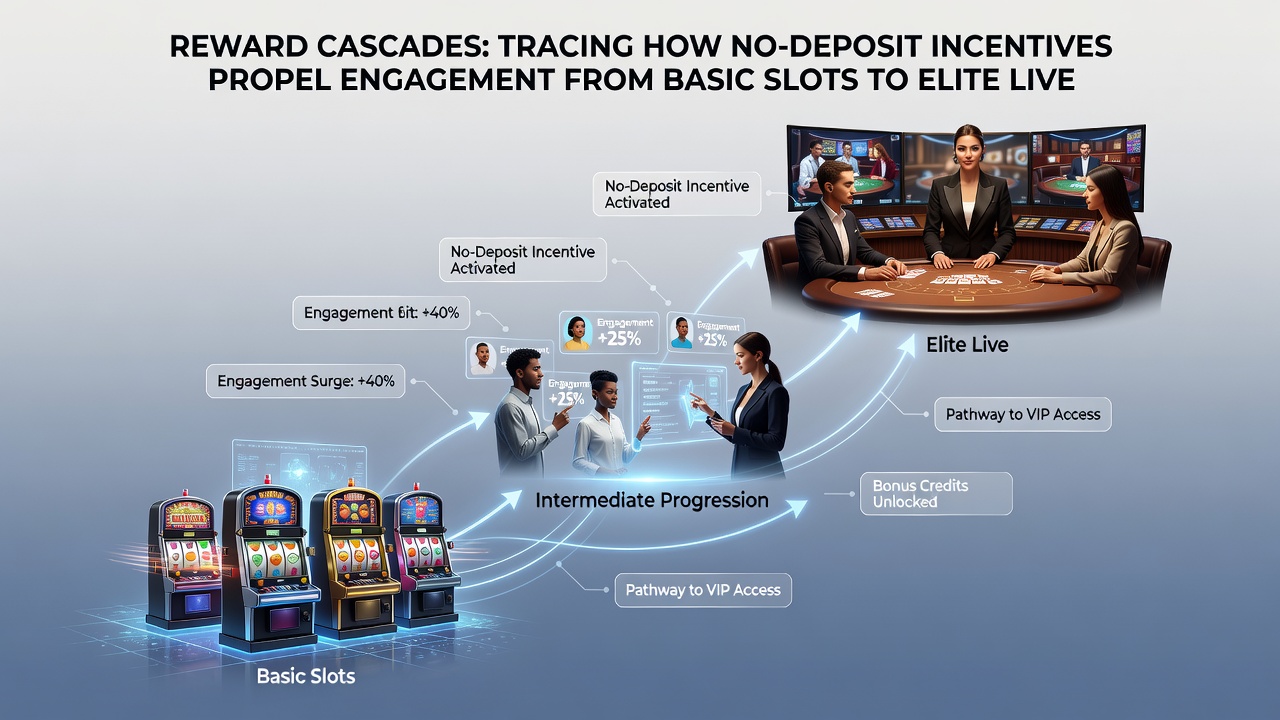
Live dealer environments operate with real-time video streams and physical equipment monitored by on-site personnel, and platforms record interaction metrics including chat participation and side-bet frequency. Accounts that arrive via reward cascades exhibit higher rates of extended play, with average session lengths reaching 28 minutes compared with 19 minutes for direct live dealer entrants.
Studies published by the University of Nevada, Las Vegas International Gaming Institute track multi-game progression and find that players completing the full cascade sequence maintain active accounts for an average of 4.2 months longer than those entering at live dealer stages directly. Platform dashboards display these patterns through heat maps that segment traffic by acquisition channel and game category.
Regulatory Compliance and Reporting Requirements
Licensed operators submit quarterly activity summaries to regional authorities that include breakdowns of incentive-driven versus organic traffic. These filings detail aggregate spend, game-type distribution, and responsible gaming interventions triggered during progression sequences. Data released in August 2026 across multiple North American jurisdictions recorded a 19 percent increase in live dealer participation linked to structured incentive programs.
Systems automatically apply spending limit prompts when accounts reach predefined velocity thresholds, and operators must log acknowledgment rates for these interventions. Compliance teams review progression paths to confirm that no-deposit offers do not bypass age-verification or self-exclusion protocols.
Conclusion
License frameworks require transparent documentation of how no-deposit incentives influence movement across game categories, and aggregated statistics continue to inform adjustments to reward structures. Platforms maintain audit trails that connect initial credit activation with subsequent live dealer engagement, providing regulatory bodies with measurable indicators of player behavior within authorized environments.